
Linking School and Healthcare Records: Breaking Down Data Silos in Children’s Lives
Across the United States, government agencies each collect and maintain their own data: schools track attendance and grades, while healthcare systems track diagnoses and treatments.
These systems work fine in isolation, but a child's life doesn't sort neatly into separate categories the way government agencies do, and there's far more power in connecting them than in leaving them apart.
School records can tell you whether a student is struggling academically. Healthcare records can tell you whether a child has asthma or a mental health diagnosis, and how these conditions are managed. Connect the two, and you can ask more powerful questions: does an asthma management program improve treatment outcomes and/or reduce school absences?
These questions matter for policy and can be obscured if the data stay siloed, even in districts supported by a robust school health infrastructure. Linking these systems, however, is not straightforward.
In a new article published in the International Journal of Population Data Science, a team from the NYC Department of Health and Mental Hygiene, Cornell University, and Stanford University developed a machine learning approach to linking Medicaid and education records in New York City.
The task is difficult for two reasons. First, education and healthcare records don't share a common identifier. The US has no national health registry, so healthcare records are split across providers and agencies, many with their own systems, while education records are similarly fragmented across school districts.
Second, the researchers were linking Medicaid records — from a joint federal-state health program for low-income individuals — with NYC Department of Education records. The two systems do not cover exactly the same children, since not every child is enrolled in Medicaid or attends public school. This means a perfect match between the two datasets is not possible.
The researchers developed a two-step machine learning model. They first cleaned and trained a random forest algorithm using duplicate records within each dataset, before applying the algorithm to identify likely matches across the two systems.
Importantly, they also developed a framework for evaluating the quality of matches when the populations represented in the two datasets do not completely overlap.
The approach matched roughly 71% of records —consistent with the researchers’ best estimate of the true overlap between the two populations. Accuracy also remained steady across birth cohorts and demographic groups, providing evidence that the model works reliably and does not miss students from different backgrounds.
But the potential of the approach extends well beyond New York City.
"This is really about breaking down the silos that separate a child's life into disconnected buckets: school over here, healthcare over there," states Katharine Sadowski, Assistant Professor of Education at Stanford University.
"Kids don't experience their lives that way, so our data systems shouldn't force that separation either."
By creating a replicable, transparent framework for linking imperfect, non-overlapping administrative datasets, this method has the potential to help other cities and states to connect education and healthcare records, and potentially data from other administrative systems in the future.
The payoff is better evidence for the programs and policies that shape how millions of children grow up healthy and ready to learn.
Click here to read the full article
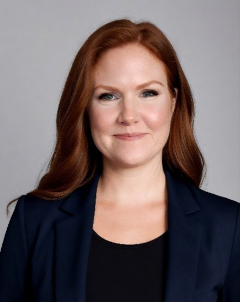
Dr. Katharine Sadowski, Assistant Professor of Education, Stanford University Graduate School of Education
Sadowski, K. (2026) “A Machine Learning Approach to Linking Medicaid and Education Records in New York City”, International Journal of Population Data Science, 11(1). doi: 10.23889/ijpds.v11i1.3434.