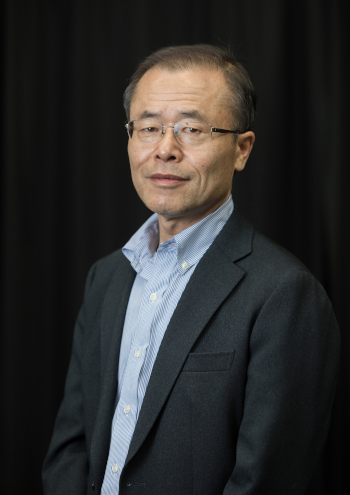
Dr. Hude Quan (1962–2026) Health Data Research Is Strongest When It Is Built With, And For, The People Who Use It.
Main Article Content
Abstract
Dr. Hude Quan, professor in the Department of Community Health Sciences at the University of Calgary’s Cumming School of Medicine, passed away on February 2, 2026, after living with metastatic cholangiocarcinoma for four and a half years. He built much of the data infrastructure that population health researchers in Canada, and around the world, now take for granted: validated methods for defining disease and comorbidity in administrative health data, an international consortium for coded health information research, and, in the final chapter of his career, a determined push to bring Canada into the ICD-11 era. He authored or co-authored more than 460 publications, held 149 research grants totalling roughly $86.5 million, and supervised 45 graduate students and postdoctoral fellows, many of whom now lead their own labs across Canada, the United States, Europe, and China.
From Dongjingcheng to Calgary
Hude Quan was born on September 26, 1962, in Dongjingcheng, China, the fourth son of Lianglian Quan and Jinyu Li. He trained at Harbin Medical University, earning his Bachelor of Medicine and Master of Public Health, and began his career there working on a national rickets prevention program run with UNICEF. A diploma in Maternal and Child Health from the University of London and a United Nations scholarship in population studies took him further afield before he arrived in Calgary, where he completed his PhD in epidemiology in 1998 and began the academic career through which he made his most enduring contributions.
Building an Institution
Dr. Quan spent his career building institutions rather than simply occupying them. Dr. Quan became a Professor in the Department of Community Health Sciences in 2012 and served as Deputy Head of the department from 2015 to 2018. He founded and directed the WHO Collaborating Centre in Classification, Terminology and Standards at the O’Brien Institute for Public Health starting in 2014, a role he held until his death.
From 2018 to 2022, he served as Director of the Centre for Health Informatics, which he had helped establish as a hub for health data science at the University of Calgary, and which his colleagues continue to lead today. He held the AstraZeneca Chiu Family Chair in Cardiovascular Health Promotion at the Libin Cardiovascular Institute of Alberta from 2016 onward, and from 2020 was Academic Lead of the Data and Research Services team for Alberta’s Strategy for Patient-Oriented Research (SPOR) Support Unit. He also co-founded and co-chaired the Person to Population Cardiovascular Health Collaborative at the Libin Institute.
A Field Built on His Methods
Dr. Quan’s scientific contributions are embedded in how population data science is practised. His coding algorithms for defining comorbidity in ICD-9-CM and ICD-10 administrative data, first published in Medical Care in 2005, remain among the most widely cited and applied tools in the field, used by researchers internationally to make hospital and health system data usable for research [1]. He founded and co-chaired the International Methodology Consortium for Coded Health Information (IMECCHI) in 2006, building a network of researchers across countries working on shared problems in coded health data [2].
As a longstanding member and later leader of the WHO’s ICD-11 Quality and Safety Topic Advisory Group, he helped shape how patient safety events and healthcare-related harm are captured in the eleventh revision of the International Classification of Diseases. This work culminated in his final major grant, a CIHR Foundation Grant (2019–2028, $2.3 million) titled “Paving the Way for ICD-11 Adoption to Advance Health Information,” through which he was leading Canada’s evidence base for the ICD-10-CA to ICD-11 transition at the time of his death. His QUAN CORE Lab, which continues at the University of Calgary, carries forward his conviction that “the best health data research is done in close partnership with the people who use it.”
Recognition
Dr. Quan was recognised with more than 20 awards over his career, including the University of Calgary’s Distinguished Alumni Award for Lifetime Achievement (2025) and Killam Annual Professor Award (2019), Fellowship in the Canadian Academy of Health Sciences (2016), and the Hadassah Ksienski Lifetime Achievement Award (2016), given for outstanding contributions by immigrants and refugees to the Calgary community, a fitting honour for a researcher who built his career and a great deal of Canadian health data infrastructure after arriving from China. He was named to Thomson Reuters’ World’s Most Highly Cited Researchers list for three consecutive years (2014–2016) and received the Dr. Harold N. Segal Award of Merit from the Canadian Cardiovascular Society and the Hypertension Canada Senior Investigator Award, both in 2017.
Recollections: A Mentor to a Generation
Perhaps his most enduring contribution was the researchers he trained. Over more than two decades, Dr. Quan supervised 45 graduate students, postdoctoral fellows, and research staff, and mentored numerous junior faculty members into independent academic careers. He received the University of Calgary’s Great Supervisor Award in 2016, recognising his genuine investment in his trainees, several of whom now hold faculty positions at institutions around the world. His generosity with ideas and opportunities was remarkable, and he took genuine satisfaction in seeing others succeed.
“As he coached me through my doctoral studies, Dr. Quan provided tremendous opportunities to grow, travel, collaborate, and develop leadership skills. His infectious love of data and science, and the way he connected with the people in his network, inspire our team to continue his great work.”
Dr. Cathy Eastwood
“Hude believed in people, often before we believed in ourselves. When I made a mistake during my doctoral research, he responded with kindness and shared mistakes of his own. He taught me how to lead with humility and respond to others with grace – lessons I carry into my own mentorship today.”
Robin Walker, PhD
“During our meetings, he always encouraged self-thinking and intellectual growth by first asking, ‘What do you think?’ before responding himself. The process taught me to think to solve challenges, while feeling completely respected. Three years into my PhD, he was diagnosed with cancer. Despite his condition, he still poured his heart into completing my training. He not only mentored my academic progress but also showed me how to live a fulfilling life.”
Dr. Frank Lee
Dr. Quan was my MSc supervisor, mentor, and life coach. He guided me through an academic and professional career in health research, and more importantly, my development as a person. Dr. Quan developed not only good researchers, but good people, and my life is better having known him. Hude's positivity and light now shine on in the people he moulded and the impact he has made within the health research community.”
Jason Jiang
“As he coached me through my doctoral studies, Dr. Quan provided tremendous opportunities to grow, travel, collaborate, and develop leadership skills. His infectious love of data and science, and the way he connected with the people in his network, inspire our team to continue his great work.”
Dr. Cathy Eastwood
Beyond the Office
Dr. Quan is survived by his wife, Sarah, and his two sons, Samuel and Joshua. He was baptized in 1997 and served as an elder at Truth Baptist Church in Calgary, where his faith was as central to his life as his research. He enjoyed the outdoors and travel.
Those of us who knew Dr. Quan through both his academic and church communities saw the same person in each. He worked tirelessly for his church and spoke openly about his Christian faith. He gave his time and energy generously, not out of obligation, but from a sincere desire to serve others in his community. The same generosity that led him to stop and help a student or colleague also carried into his service at church.
“Dr. Quan mentored me in both work and faith. I learned from him about research, collaboration, leadership, and the responsibility that comes with being given opportunities. I also learned from how he lived his Christian faith. His faith was not separate from his professional life. The same qualities were visible in both: humility, service, generosity, perseverance, and love for other people. He showed me that achievement and humility did not have to be opposites, and that a successful career could still be centered on serving others.”
Dr. Na Li
His faith was especially visible during his illness. Even while living with cancer, he continued to think about other people: his students, colleagues, church community, and friends. He continued to encourage, mentor, and serve. For many of us, the way he faced illness showed more clearly than words what his faith meant to him.
And there was the Hude his friends enjoyed being with: conversations that moved easily from research to faith, family, and life; his humour; meals and travel together; and his genuine interest in how others were doing. His care for people extended beyond their research. These moments will never appear in citation counts or institutional histories, but they are essential to how those who knew him will remember him.
Carrying the Work Forward
The Centre for Health Informatics, the WHO Collaborating Centre, Dr. Quan’s trainees, and the wider population data science community he helped build all carry forward work he started. Even through four and a half years of illness, he continued to lead, publish, and mentor, remaining engaged with his students, his lab, and the WHO community until close to the end. Dr. Quan’s focus on ensuring high-quality population data are used to improve people’s lives remains the cornerstone of the QUAN CORE team today. His future-focused ideas and methods will be emulated, but we will miss the way he expanded our minds and made every difficult project seem possible.
References
-
Quan H. Sundararajan V., Halfon P., Fong A., Burnand B., Luthi J.-C., Saunders L. D., Beck C. A., Feasby T. E. & Ghali W. A. Coding algorithms for defining comorbidities in ICD-9-CM and ICD-10 administrative data. Medical Care, 43(11):1130-1139. 10.1097/01.mlr.0000182534.19832.83
10.1097/01.mlr.0000182534.19832.83 -
Otero Varela, L., Le Pogam MA, Metcalfe A, Kristensen PK, Hider P, Patel A, Kim H, Beck C. A., Feasby T. E., Carlini E, Perego R & Gini R Empowering knowledge generation through international data network: the IMeCCHI-DATANETWORK. Int J Popul Data Sci.,2005, 5(1):1125. 10.23889/ijpds.v5i1.1125
10.23889/ijpds.v5i1.1125
Article Details

Article Sidebar